
The 6th arrondissement is small enough to cross on foot in fifteen minutes, and dense enough that crossing it quickly is a waste. Saint-Germain-des-Prés holds the oldest standing church in Paris, two terraces that have been arguing since the 1940s over who owns Sartre, a working mint you can walk straight through, and a 1640s reading room that costs nothing to enter. An afternoon is the right unit of time here, as long as you spend it at the pace of one coffee at a time.
What the quarter is and what you actually see
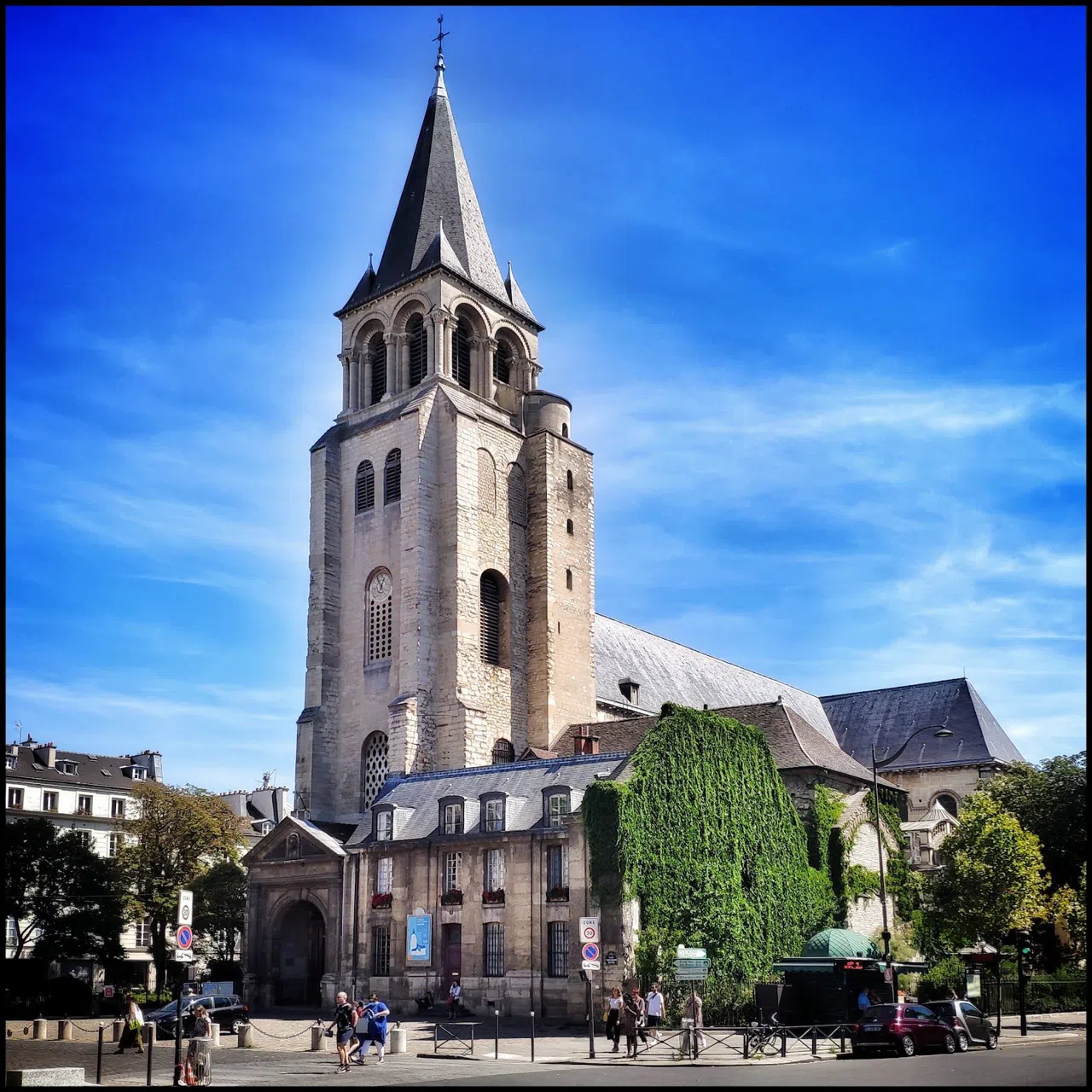
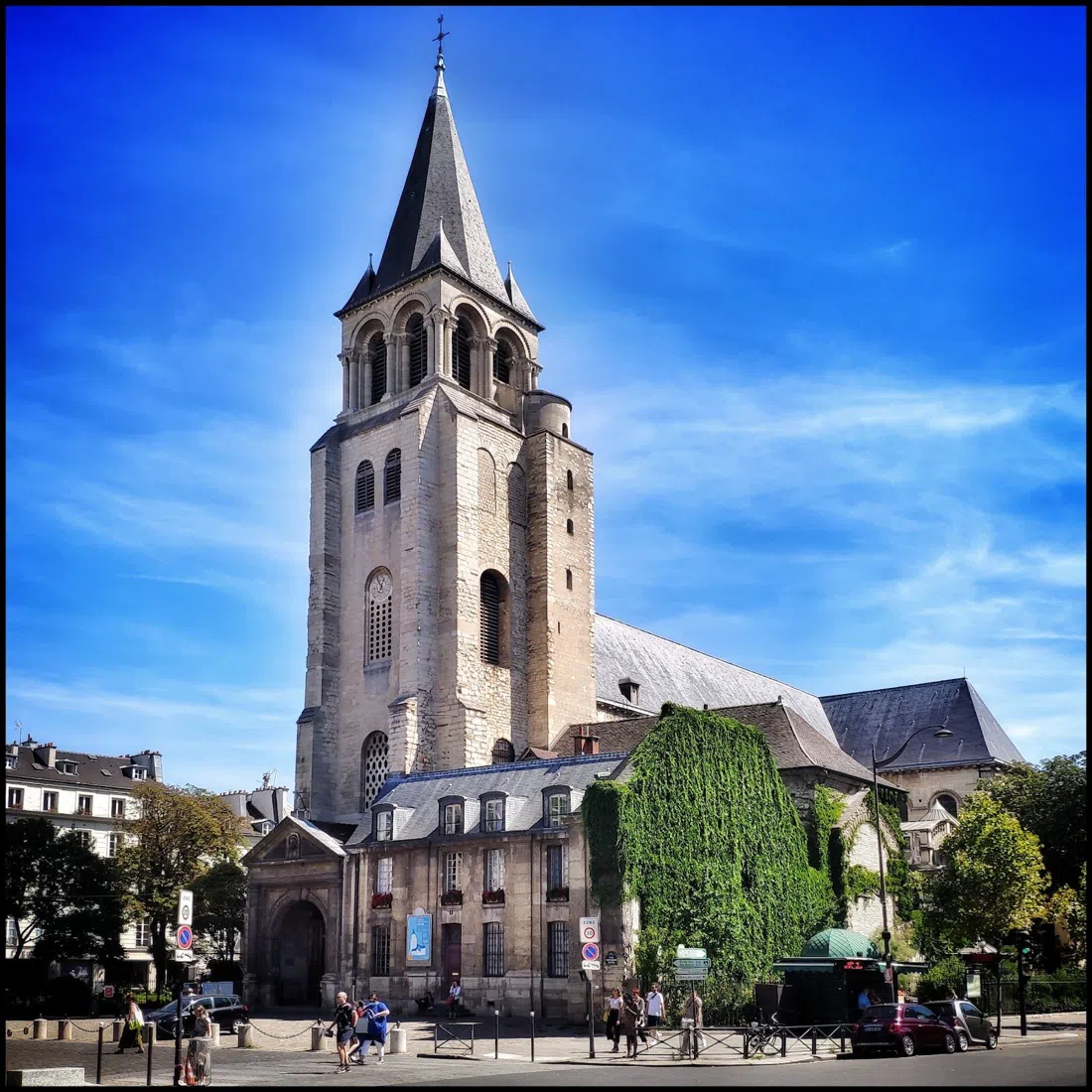
There is no ticket for Saint-Germain-des-Prés and no gate to queue at. It is a wedge of the Left Bank bounded by the Seine to the north and the Jardin du Luxembourg to the south, with boulevard Saint-Germain cutting it in half and a Romanesque bell tower standing where the boulevard meets place Saint-Germain-des-Prés. On a slow afternoon you see a sequence of rooms rather than one monument: two church interiors, a coin factory still in production, a seventeenth-century library, a market street, and four or five café terraces that have been photographed more than most national galleries.
The route below runs about two and a half kilometres end to end. Nothing on it is more than twelve minutes' walk from anything else, which is the whole argument for doing it on foot with no plan tighter than a rough order. If you are building a wider trip around it, the Paris guide covers how this quarter sits against the rest of the city.
Start inside the abbey
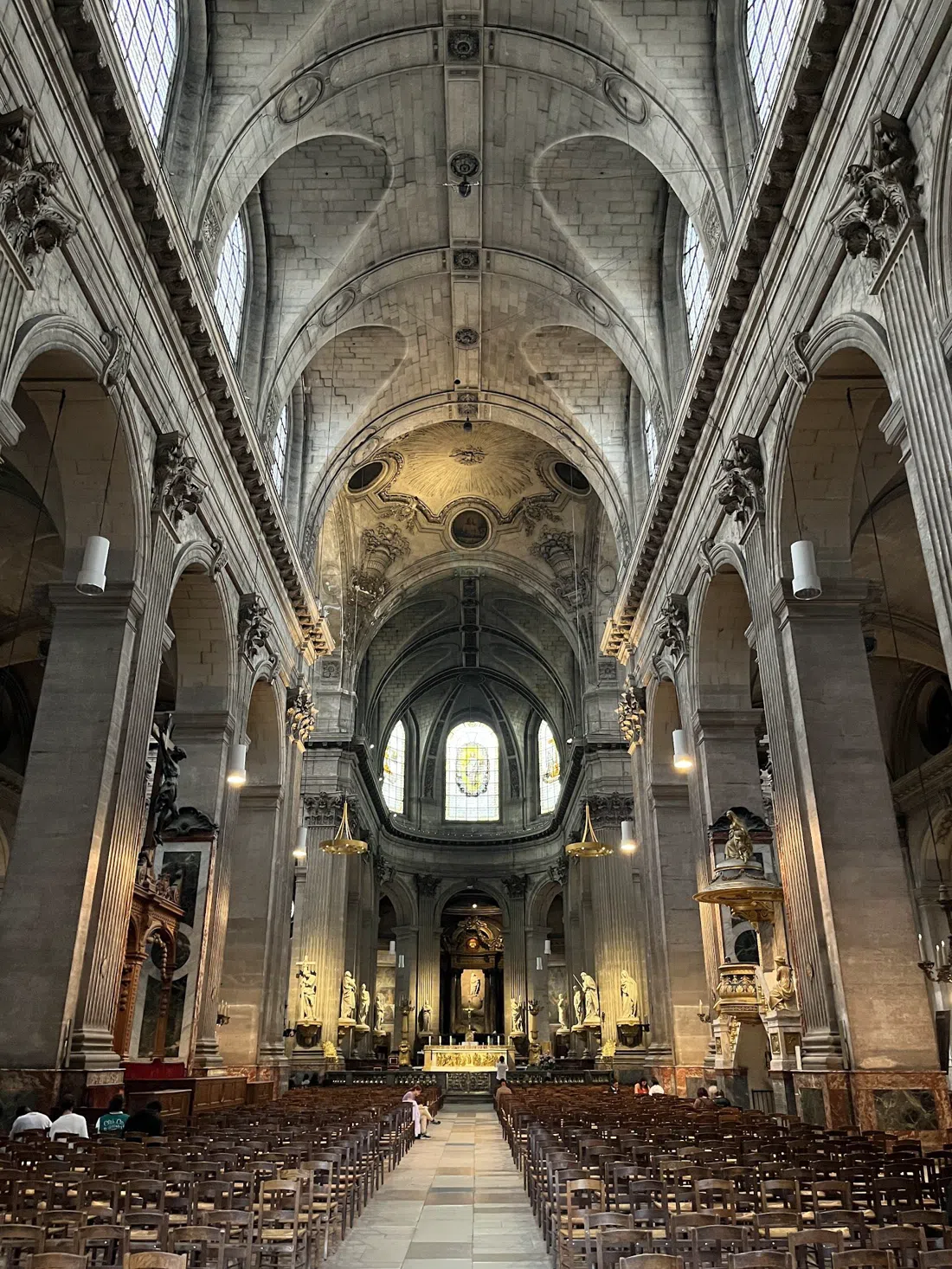
Église Saint-Germain-des-Prés (place Saint-Germain-des-Prés, right on the boulevard) is the oldest standing church in Paris and the anchor of everything around it. The multi-year restoration is finished, and the starry painted nave is now the best free sight in the 6th, with no ticket and no booking. It remains a working parish, so there are no visits during Mass and you are expected to come in quietly; groups are fine as long as they behave like congregation rather than audience. Twenty to thirty minutes is enough unless the organ is going.
Five minutes south, Église Saint-Sulpice (place Saint-Sulpice) is open daily from roughly 8am to 7:30pm, free, and markedly emptier. The draw is Delacroix's late murals and one of the largest organs in France, often being played when you walk in, which turns a ten-minute art stop into a forty-minute sit-down. Groups are welcome outside services, and there are monthly guided visits of the Delacroix chapel and the gnomon if you want the full explanation rather than the wall label.
The terraces, and which one to actually sit at
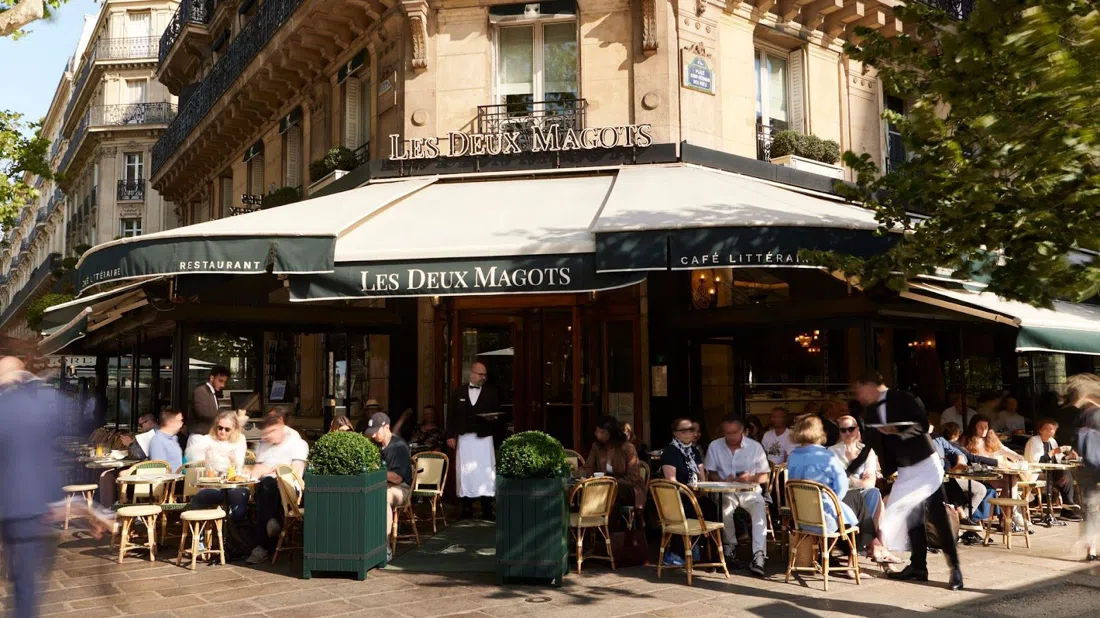
Les Deux Magots (place Saint-Germain-des-Prés) is the Sartre and Beauvoir address, and the terrace that genuinely looks at the abbey tower. It opens 7:30am to 1am daily, takes walk-ins on the terrace and bookings online, and has a formal groups and private-events offer if you are organising a party. You pay square prices for the view, around €8 to €10 for a coffee and €40 to €80 for a full meal, so treat it as one coffee with a good sightline rather than dinner.
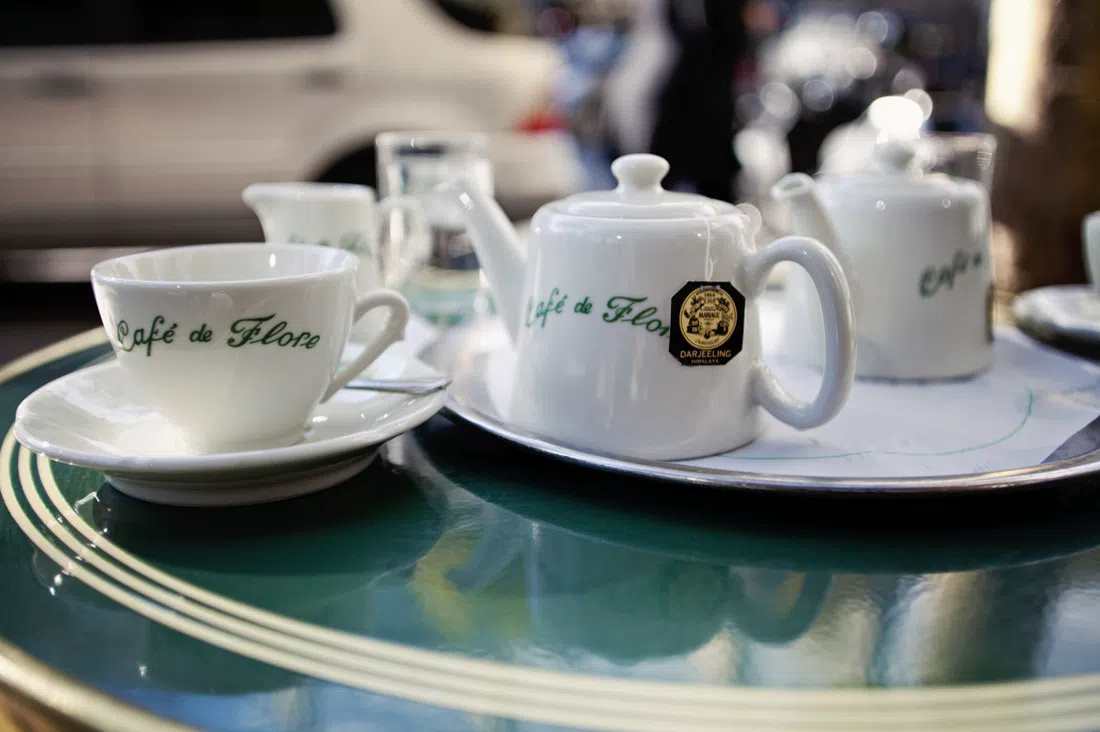
Café de Flore (boulevard Saint-Germain, next door) is the one locals still use. Open daily 7:30am to 1:30am, no reservations on the terrace, strictly first-come; small groups are fine, large ones get split across tables. Coffee is around €8, an omelette or croque €15 to €20. The upstairs room is the real find: you can sit there undisturbed for an hour, which the terrace will not allow. Go before 10am or after 10pm if you want the terrace without the scrum.
La Palette (rue de Seine, in the gallery blocks) is the best-value terrace in the quarter and the one I would choose for a long sit. Open daily around 8am to 2am, coffee €4 to €5, wine by the glass from about €7, plates €15 to €25. The room is a protected monument and Cézanne and Picasso drank here, yet it still reads as a gallery-district local rather than a set piece. The terrace is first-come and jealously guarded: two or three people yes, a party of ten no.
Sit-down meals and the oldest café in the city
Brasserie Lipp (boulevard Saint-Germain) is still the political and publishing canteen of the Left Bank, open daily from roughly 9am to 2am, with bookings taken online and private rooms for groups and dinners. Choucroute garnie or sole runs €30 to €40 and mains sit mostly between €25 and €45; the millefeuille is served late. Ask for a ground-floor table when you book, because upstairs is the diplomatic exile and nobody has ever been pleased to be sent there.
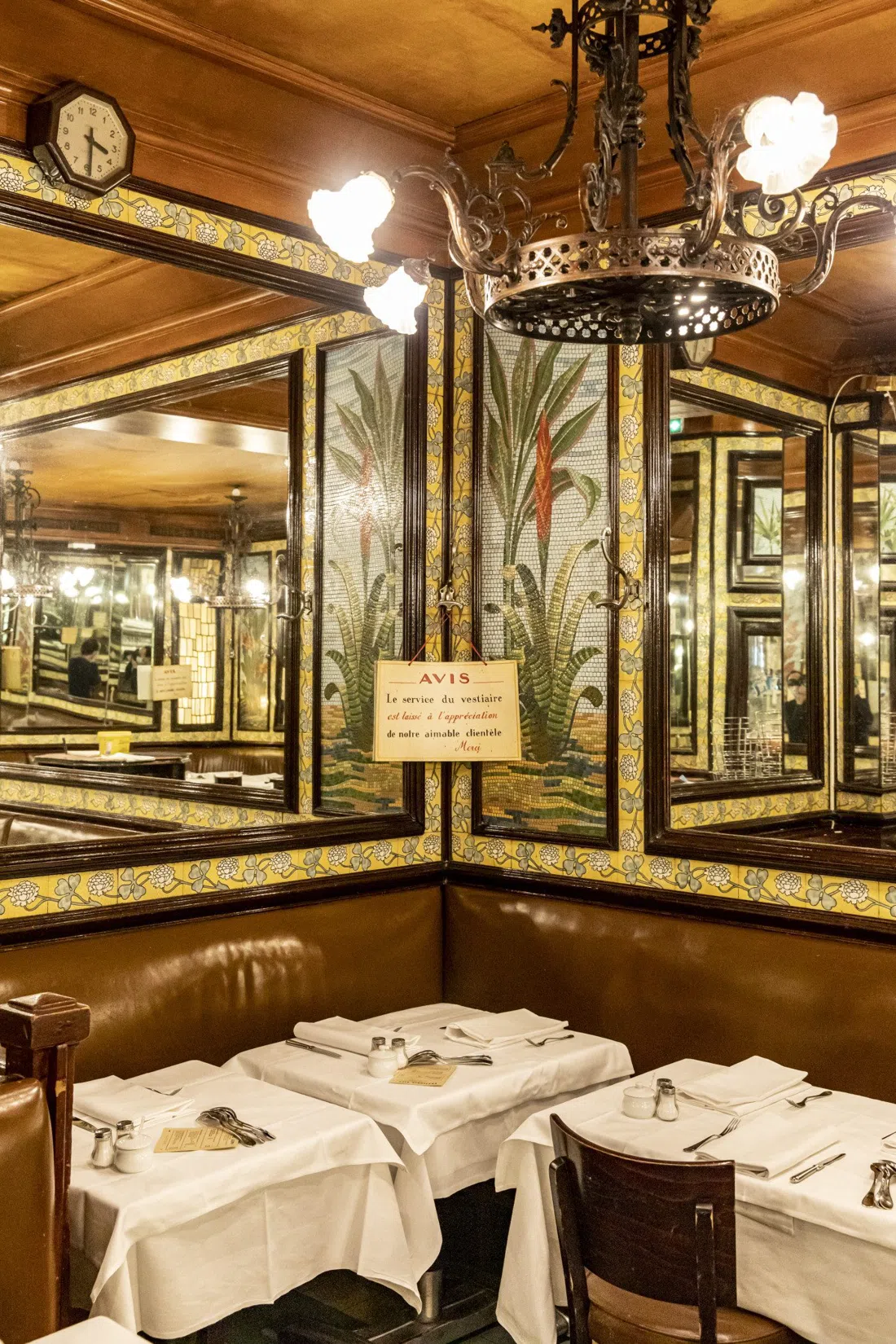
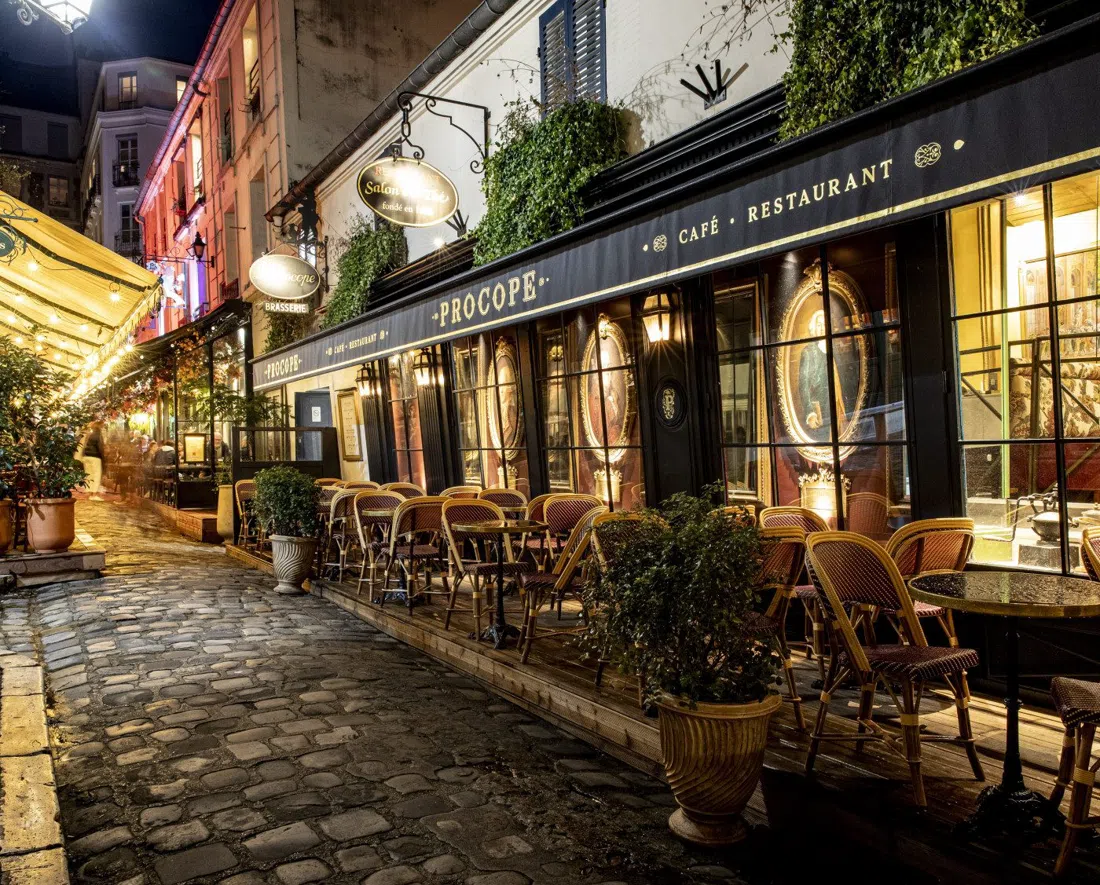
Le Procope (rue de l'Ancienne-Comédie, two minutes from Odéon) has been trading since 1686 as the oldest café in Paris, was refreshed in 2025, and now has a tea room running from noon. It is open daily until midnight, takes reservations, and the upstairs salons genuinely handle large tables with set group menus. Mains are €25 to €35, set menus from about €35. It is a history stop that happens to serve coq au vin, and the one address in this guide that comfortably seats a table of twelve.
Two quiet rooms most visitors walk past
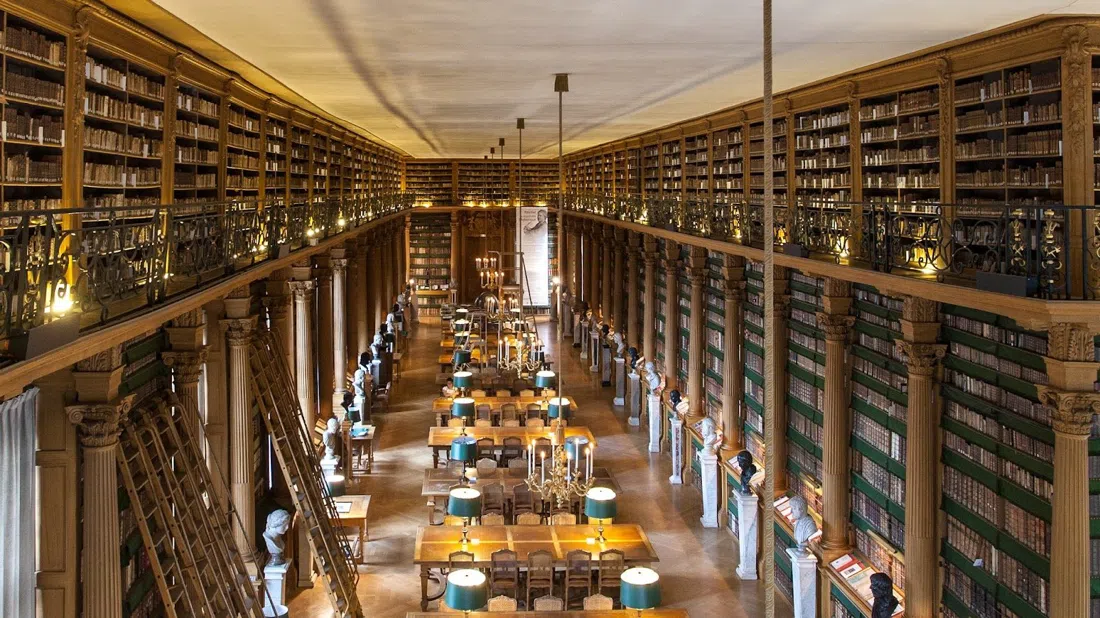
Bibliothèque Mazarine (quai de Conti, inside the Institut de France) is France's oldest public library and the easiest room here to walk straight past. Entry to the 1640s reading room is free and self-guided, Monday to Saturday 10am to 6pm, closed 1 to 15 August. The conditions are real: five people per group maximum, ID left at the Institut desk, and silence, because people are working. If you want to use it properly rather than look at it, the annual reader's card is €15. This is not a coach-group venue and will not pretend otherwise.
Monnaie de Paris – 11 Conti (quai de Conti, next door) is a working mint you can walk through, open Tuesday to Sunday 11am to 7pm, late until 9pm on Wednesday, closed Monday. Tickets are €12 full, €8 concessions, and free if you are under 26 or visiting on the first Sunday of the month; group bookings and guided tours of the ateliers are available. It is the one indoor option here that works in rain and holds a mixed-age group for a solid ninety minutes without anyone drifting.

Food bought on the street and eaten in the garden
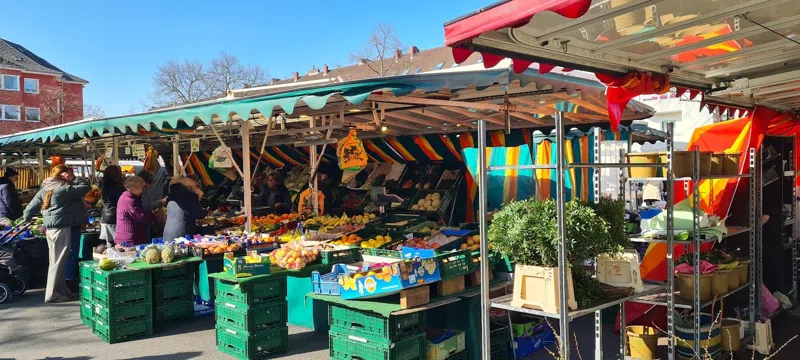
Rue de Buci (just east of the abbey) is a working food street rather than a staged market, with stalls Tuesday to Sunday that shut for a long lunch. Buy cheese, bread and a bag of cherries for around €20 to €25 for two. It is an open street, so group size is irrelevant, though the terraces along it fill fast at aperitif hour.
Pierre Hermé Bonaparte (rue Bonaparte, two minutes from the church) sells macarons at around €3 each and an Ispahan pastry at around €10, open daily with Monday from 1pm and Sunday closing at 6pm. It is a takeaway counter with nowhere to sit, so groups queue on the pavement. Buy a box and carry it to place de Furstemberg, thirty seconds away, which has the best bench-to-noise ratio in the quarter.

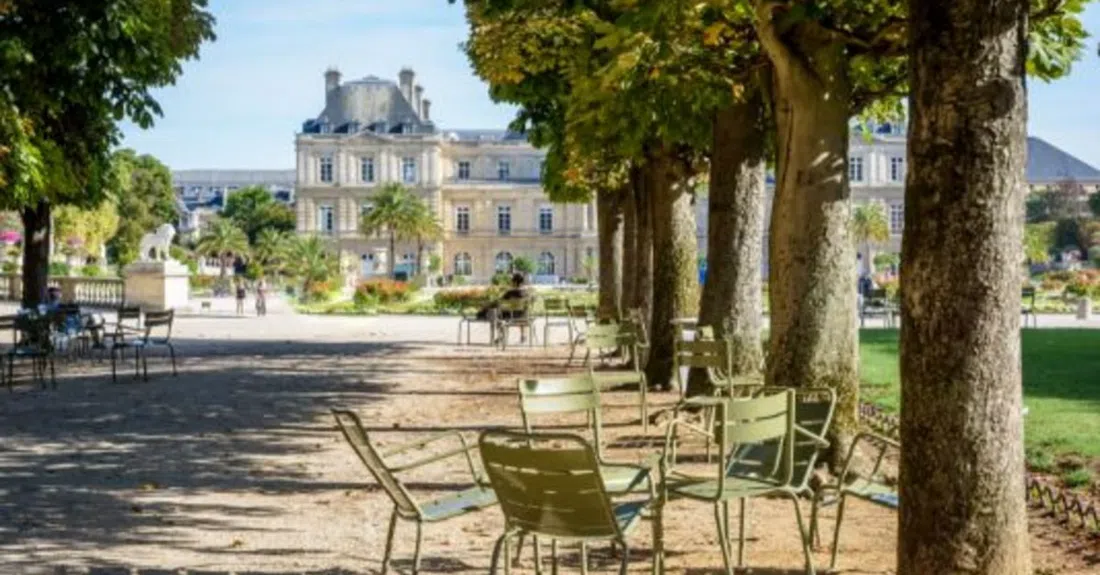
Then walk south to the Jardin du Luxembourg (southern edge of the quarter), free and open dawn to dusk, with hours shifting twice a month as the light changes. This is the quarter's garden and its best sit-down, but the lawns are mostly off-limits and guards whistle at anyone who tries, so take one of the metal chairs like everyone else. Boat hire on the basin and the puppet theatre cost a few euros.
The riverside walk and the bookshop
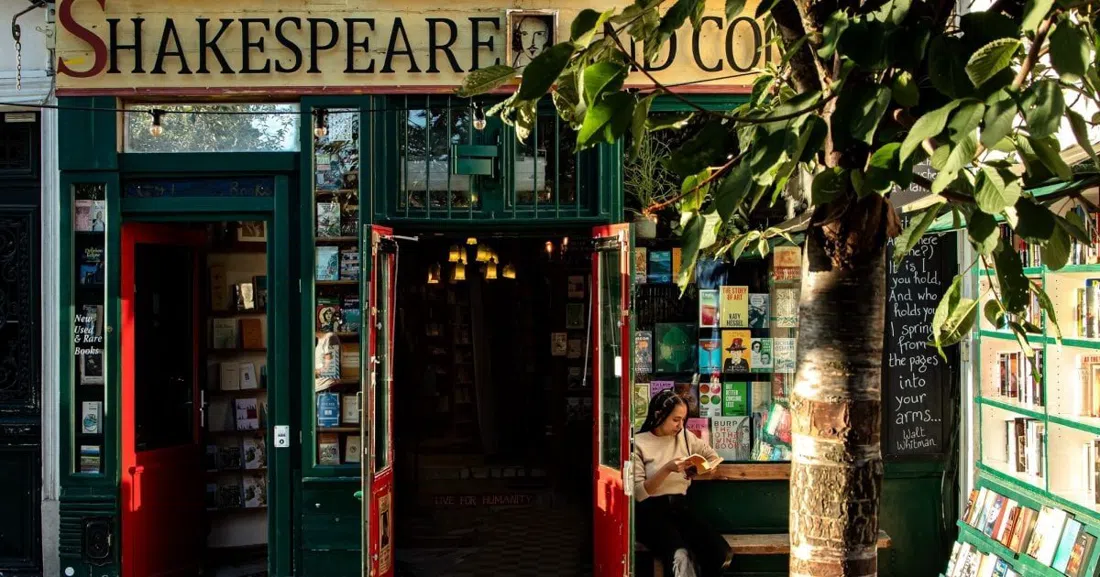
Shakespeare and Company (quai Montebello, about ten minutes along the river) is the one unmissable literary stop near the quarter, free to browse, open Monday to Saturday 10am to 8pm and Sunday noon to 7pm, with a café next door for coffee and cake. It is capacity-limited, so expect a 10 to 15 minute queue, and the restrictions are enforced: no photography inside, no large backpacks, and it cannot admit tour groups or school parties. If you are a few people, send everyone in singly; if you are twelve, skip it and stay on the quay.
When the light goes
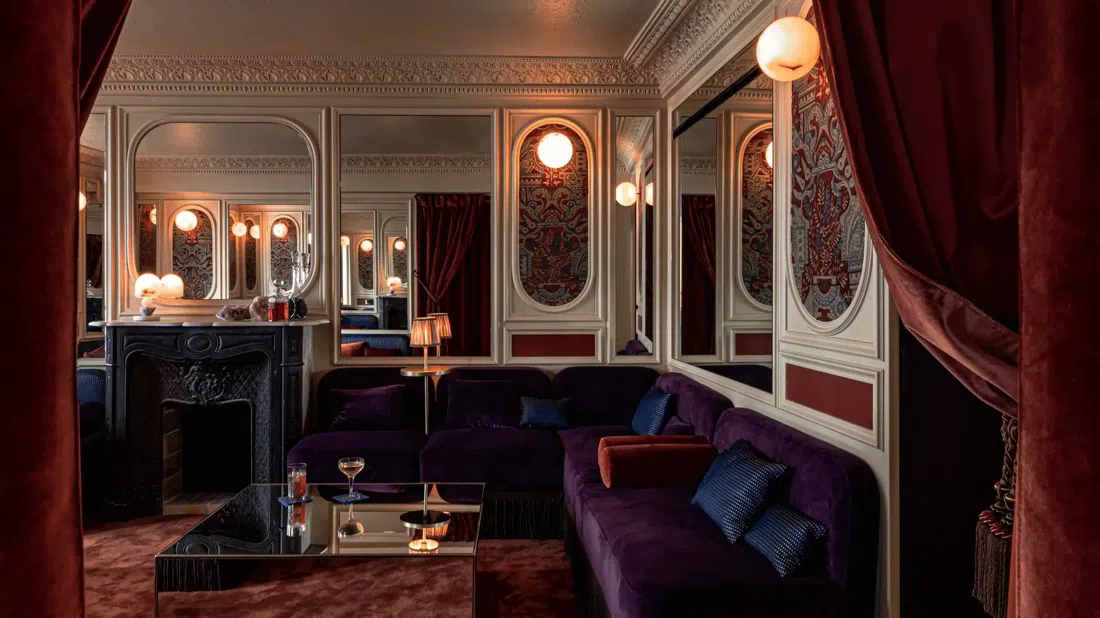
Bar Joséphine – Mandarin Oriental Lutetia (boulevard Raspail) is the one genuinely grand room in the quarter for a drink, open from 5pm to 1am with live jazz Thursday to Saturday, 8pm to 11pm. Reservations are advised, dress is smart-casual, groups are taken by arrangement, and cocktails run €25 to €30. It has carried the Mandarin Oriental Lutetia name since the rebrand, and it is named for Josephine Baker, who really did stay here.
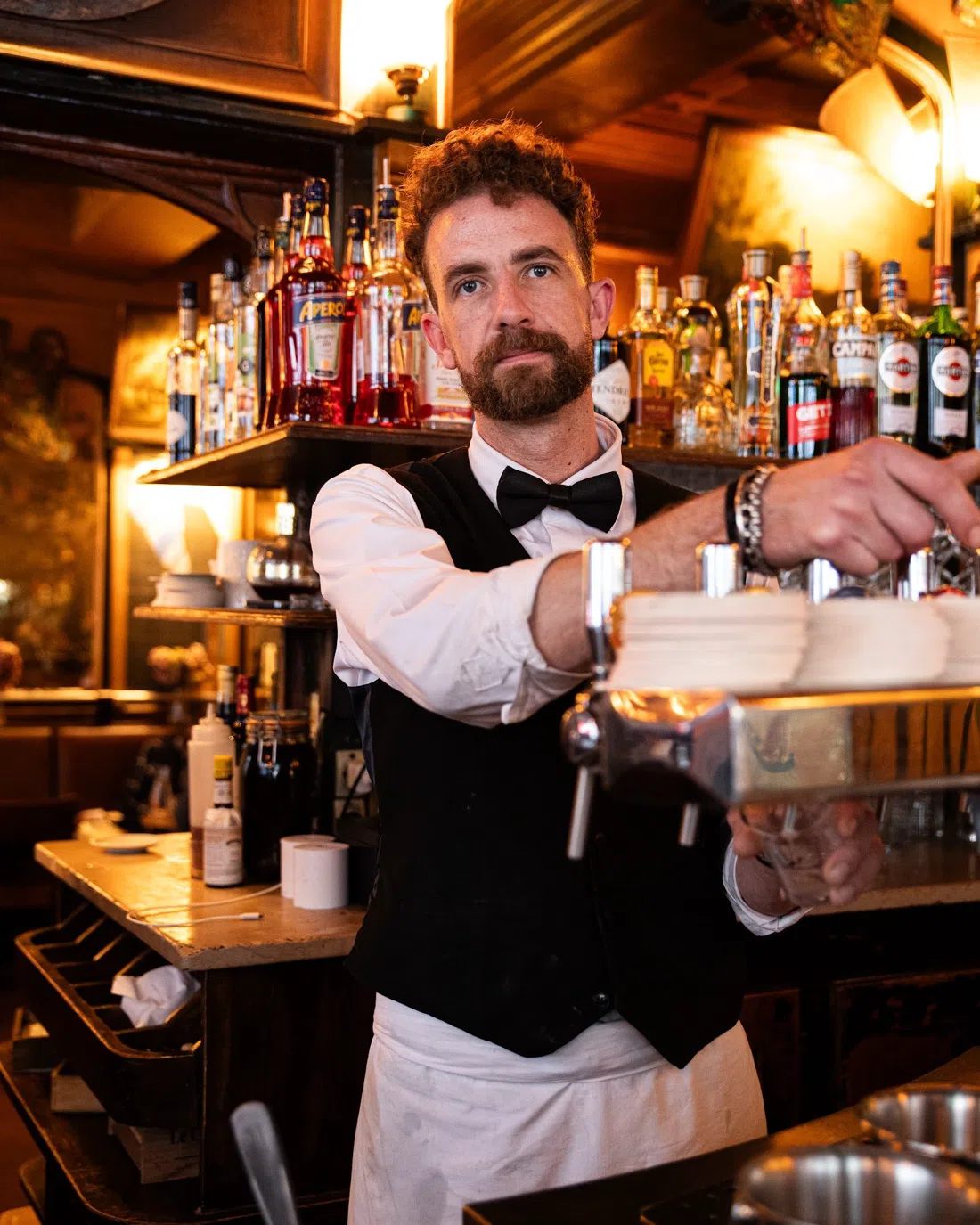
Prescription Cocktail Club (rue Mazarine) is the cheaper, later option, and the reason that street stays busy after the cafés shut. Daily from 7pm, until 4am Friday and Saturday, cocktails €16 to €20. Walk-ins work, but door staff thin out big groups as the night goes on, so book for more than six, and note that it closes for part of mid-August.
How long it takes
Allow four to five hours for the version above without rushing: thirty minutes in the abbey, twenty in Saint-Sulpice, fifteen standing in the Mazarine reading room, ninety at the mint if you take the full route, an hour for rue de Buci plus the garden, and forty-five minutes for whichever terrace you commit to. A clean shape is 1pm on rue de Buci, 2pm in the garden, 4pm churches, 5pm the mint or the library, and a terrace at 6:30pm. Cut the mint and you have a comfortable three hours.
Best time to go
Early afternoon is the quiet window inside the churches; the terraces are calmest before 10am and after 10pm. Avoid Monday if the mint matters, because it is closed, and remember the pâtisserie opens at 1pm on Monday and closes at 6pm on Sunday. The market street runs Tuesday to Sunday and is busiest on Saturday morning. The library closes 1 to 15 August and the cocktail bar closes for part of mid-August, so a mid-August afternoon loses two of the best rooms here.
Season changes the order more than the content. The Luxembourg closes at dusk, which in deep winter is mid-afternoon, so do the garden first in the cold months and save the churches and the mint for the dark. In summer, flip it: garden chairs at 7pm are the single best-value seat in the 6th.
Tickets, queues and whether to book anything
Almost all of this is free and walk-in. Only the mint charges at the door, and there is no timed-entry problem anywhere in the quarter; the only genuine queue is the bookshop's 10 to 15 minute capacity wait. You need no tickets at all to do the walk.
Guided options do exist if you would rather be told than read: the monthly visits of the Delacroix chapel and the gnomon, atelier tours at the mint, and the bookable experiences attached to this page. Those carry 17,492 traveller reviews between them, with the top one rated 4.4/5 from 7,459 reviews, they run seven days a week, and the booking platform flags the top tour as likely to sell out, so if your dates are fixed, book ahead rather than deciding on the morning.
Access and rules
The surfaces are mixed: cobbles on rue de Buci, steps into both churches, gravel across the Luxembourg. The mint is the most reliable indoor option for anyone who needs flat floors and seating. The abbey is a working parish, so no visits during Mass. The library's five-at-a-time rule and ID requirement are not negotiable, and neither is the no-photography rule at the bookshop. Bar Joséphine expects smart-casual; nowhere else in the quarter cares what you wear.
Is it worth it
Yes, with one condition: do it as an afternoon, not as a checklist stop between two monuments. The quarter rewards sitting down more than walking around, and the two things people remember afterwards are both free, the restored starry nave and the Mazarine reading room. It suits couples, solo readers and anyone who would rather look at one church properly than three badly. It suits mixed-age groups if you build around the mint, Le Procope, rue de Buci and the garden, all of which take numbers. It does not suit a party of ten trying to get into the bookshop, the library or La Palette's terrace, and no amount of charm will change that.
Practical notes
Métro line 4 drops you at Saint-Germain-des-Prés or Saint-Sulpice, line 10 at Mabillon, lines 4 and 10 at Odéon, and the RER B at Luxembourg for the garden end; river boat services stop on the quays nearby if you would rather arrive by water. Cards work everywhere, including the cafés, but carry €20 to €30 in cash for market stalls and the church donation box. Budget around €35 to €60 a person for a realistic afternoon (one terrace coffee, a street picnic, a mint ticket and a pastry), or close to nothing if you stick to the churches, the library and the garden. Add a dinner at Lipp and a cocktail afterwards and you are past €120. If you want to wake up inside this quarter rather than commute into it, start with Paris hotel search; staying between the abbey and the Luxembourg is what makes the slow version of this walk possible twice in a trip.